Episode 2: Who decides what?
Parliament, Commission and the two councils
Read along
Tap a sentence to jump there.
Council of the EU, European Council, Council of Europe. Three councils, almost the same name, all somehow European. Even adults mix them up all the time.
So, here's the answer: the Council of Europe is not part of the EU. It's a separate organisation with 46 countries, it looks after human rights and has its own court in Strasbourg. And just to make it harder: the blue flag with the stars belonged to the Council of Europe first.
That leaves four institutions you should know: the Parliament, the Commission and the two councils.
First, the European Parliament, the only one you elect directly. 720 members, newly elected every five years. Big countries send more, small ones fewer: Germany 96, Malta 6. But they don't sit by country, they sit by political family, in groups. Parliament co-decides on laws, decides on the budget and keeps an eye on the Commission.
The European Commission is something like the EU's government. 27 members, one per country, led by the Commission President, currently Ursula von der Leyen. But the commissioners aren't supposed to represent their home country, they represent the EU as a whole. The Commission proposes almost all laws and makes sure countries stick to them, in court if necessary.
The Council of the EU is where the governments meet. Here sit the responsible ministers of the 27 countries: for farming, the agriculture ministers, for the environment, the environment ministers. The presidency changes every six months. The Council passes laws together with Parliament, usually by a special majority. More on that in episode five.
And then there's the European Council. Yes, it really is called almost the same. These are the bosses: the heads of state or government of the 27 countries, for Germany the Chancellor. Plus its President and the Commission President. At their summits, they decide where the EU is heading. But the European Council doesn't pass laws. Rule of thumb: in the Council of the EU sit the ministers, in the European Council the bosses. And in the Council of Europe: not the EU at all.
For most laws, it works like this: the Commission proposes. Parliament and Council discuss, amend, and both have to agree. Parliament speaks for the citizens, the Council for the governments. And the Court of Justice in Luxembourg watches over the rules. No one decides alone.
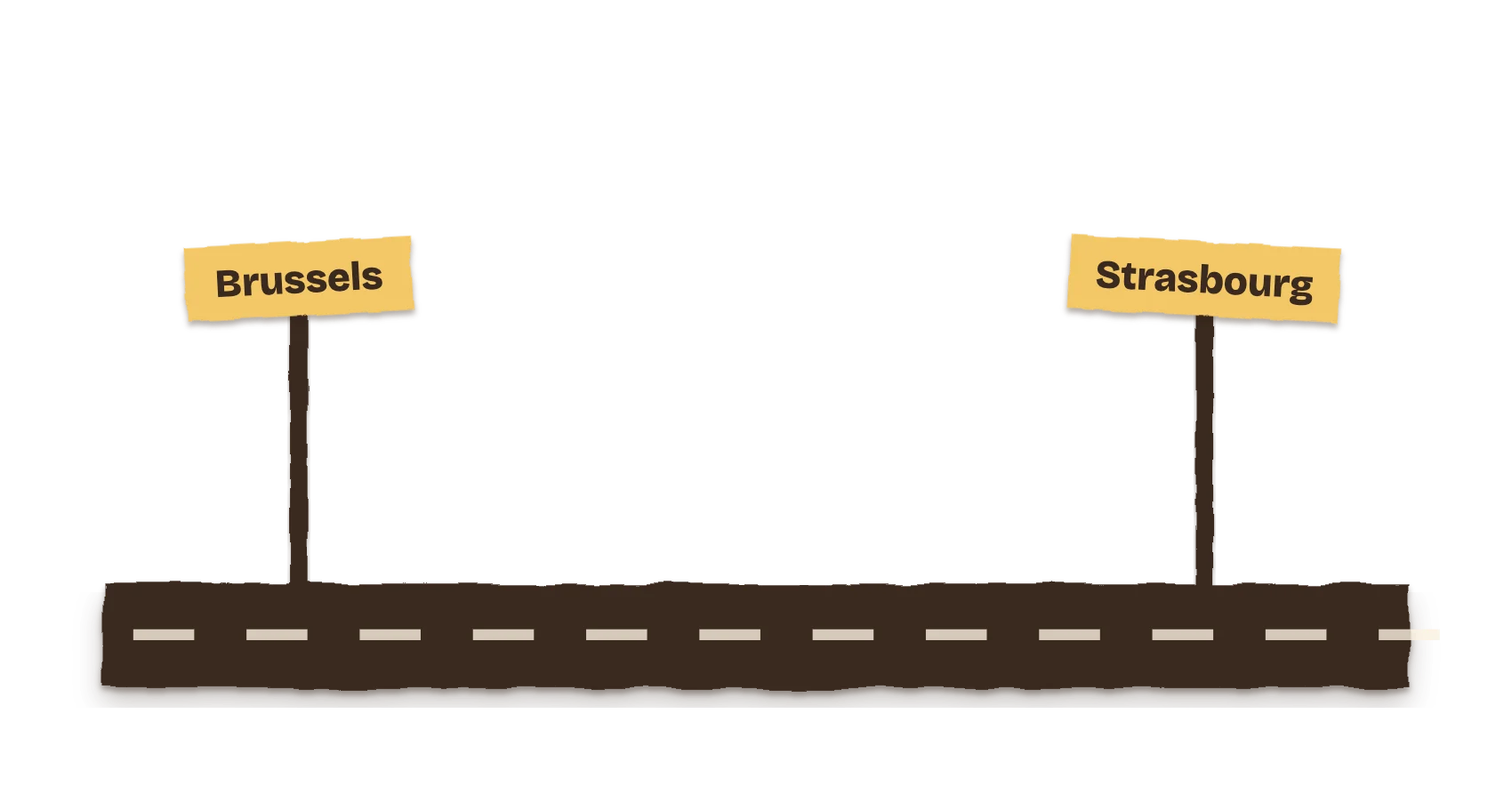
For many votes in Parliament, it's recorded who voted how. You can check it on openrcv.eu. And why does the Parliament move from Brussels to Strasbourg for a week almost every month? We'll find out in episode three.

Episode 3: The Parliament
Who sits there, how it works and why it commutes
Twelve times a year, Parliament packs its boxes and moves from Brussels to Strasbourg. Why would anyone do that?

All ten episodes
Now go and see who votes how.
In the European Parliament, almost every important vote is recorded by name. On openrcv.eu you can see how your MEPs voted.
Open openrcv.eu